Increasing urbanization of the population and general lack of land have forced major cities to reconsider their approach to development. Some of the architectural strategies that have now become vital in turn would include adaptive reuse and modular construction-those practical, sustainable, and cost-effective options compared to traditional building methods.
Adaptive Reuse: Giving New Life to Old Structures
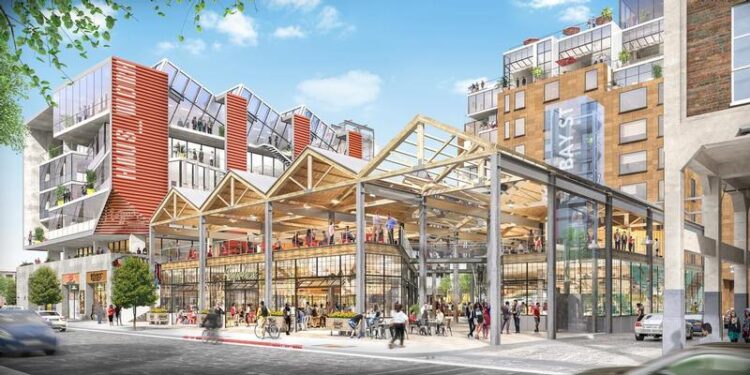
Adaptive reuse is the reinvention of old, abandoned buildings into functional spaces answering today’s needs. Architects don’t destroy outdated structures but turn them into vibrant cafes, art galleries, offices, or modern homes.
Key benefits to adaptive reuse include:
- Preserving historical value: Many old structures have architectural features that are truly unique and thus contribute to a form of cultural distinctiveness in the downtown core.
- Lower cost of construction: In fact, reusing structures means less need for new materials.
- Reduced Waste Generation: Adaptive reuse prevents demolition and, therefore, reduces waste and other environmental impacts.
Indeed, cities worldwide, in all regions, have seen great success with the redevelopment of old warehouses, factories, and commercial buildings into vibrant mixed-use districts that transform former underutilized neighborhoods.
Modular Building: Faster, More Efficient Construction
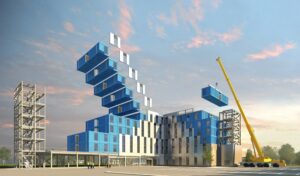
While adaptive reuse focuses on structure restoration, modular construction focuses on the triumvirate of speed, precision, and efficiency. Elements in modular building are made under controlled factory conditions before being transported to the site for assembly.
The key benefits of modular construction are:
- Smaller timescale for construction: site preparation and module manufacturing occur parallel to each other, greatly reducing the total time required to deliver a project.
- Minimal environmental disruption: It minimizes disturbance in the environment due to less noise produced and less material clutter, also fewer delays happen due to weather conditions.
- Greater consistency and quality: Factory manufacturing means building components that are standardized and exact.
It is non-negotiable to give up fast delivery in the name of structural integrity, and that is what makes modular construction ideal for housing development, hotels, schools, and public buildings.
Efficient, Sustainable, and Flexible Solutions for Cities
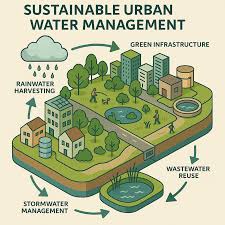
Both adaptive reuse and modular construction have significant cost savings and environmental benefits. Adaptive reuse reduces demand for raw materials, while modular construction reduces waste and maximizes efficiency in resources. Besides, modular buildings can be extended or otherwise modified with ease to suit all possible uses that might come up in the future, a requisite for modern flexible urban planning. In the process, it enriches cityscapes by preserving cultural heritage and architectural character.
Conclusion
Adaptive reuse and modular construction have become increasingly important in the context of cities finding their physical growth constrained, with their necessary focus switched to sustainable development. As a combination, these methods will enable the creation of an efficient, flexible urban space sensitive to the environment that can support changing human needs.