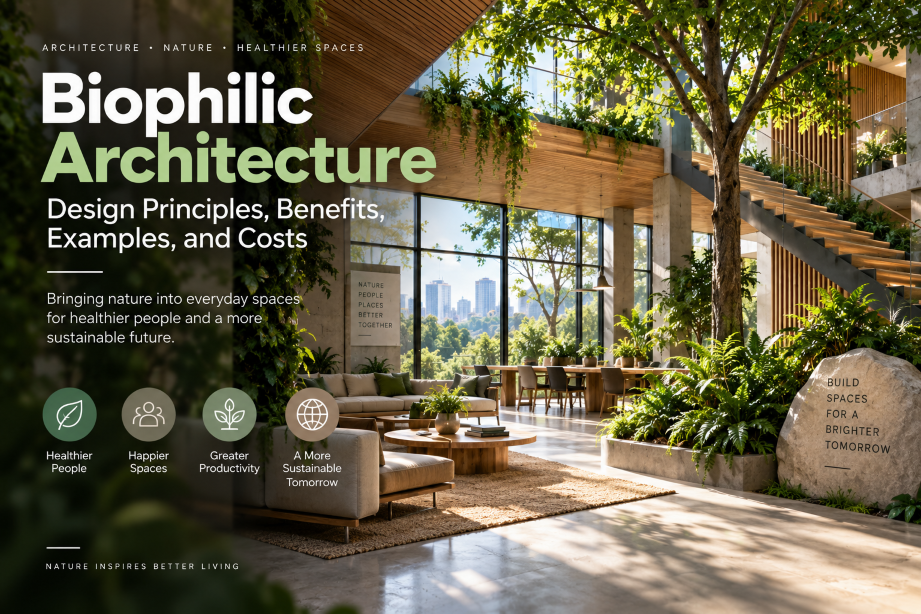
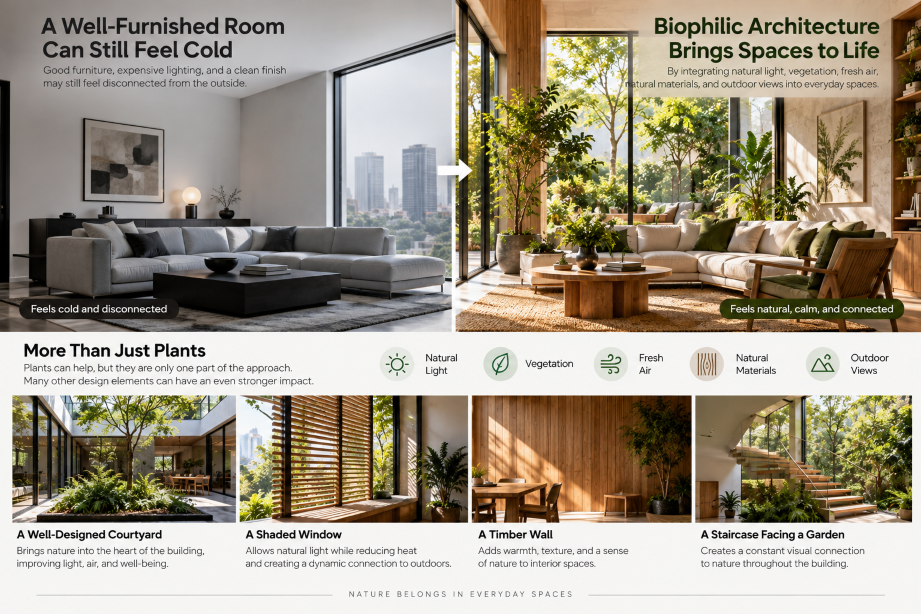
A room can feel cold even when its temperature is comfortable. It may have good furniture, expensive lighting, and a clean finish, but still feel disconnected from the world outside. Biophilic architecture addresses that problem by bringing natural light, vegetation, fresh air, natural materials, and outdoor views into everyday spaces.
The idea is often reduced to putting plants in an office. Plants can help, but they are only one part of the approach. A well-designed courtyard, a shaded window, a timber wall, or a staircase facing a garden may have a stronger effect than a decorative green wall that nobody maintains.
What Is Biophilic Architecture?
Biophilic architecture is a design approach that strengthens the relationship between people and nature. It can involve direct contact with nature, indirect references to natural forms, or spatial experiences that resemble the way people move through natural environments.
Direct examples include daylight, trees, water, natural ventilation, planted roofs, and views of the landscape. Indirect examples include wood grain, stone, earth-based colours, irregular textures, natural patterns, and artwork inspired by plants or geological formations.
The purpose is not to make a building look like a forest. The purpose is to create spaces that feel more comfortable, varied, and connected to their surroundings.
Important Design Principles
Use Daylight Carefully
Daylight is one of the most practical biophilic features. Windows, skylights, roof lights, and clerestory openings can change the character of a room throughout the day. They also give occupants a sense of time and weather.
More glass is not always better. Poorly positioned windows can cause glare, overheating, and loss of privacy. External shading, blinds, suitable glazing, and careful building orientation are needed to make daylight useful rather than uncomfortable.
Create a Relationship With the Outdoors
A direct view of a tree or garden can make a room feel less enclosed. This connection does not require a large site. A small planted courtyard, balcony, terrace, or carefully framed view can provide a valuable visual break.
Circulation areas are often overlooked. A stair beside a courtyard or a corridor with a view can make movement through the building more pleasant. These decisions also encourage people to use stairs and shared spaces instead of moving only between private rooms.
Choose Natural Materials
Timber, stone, clay, cork, bamboo, wool, and linen can introduce warmth and texture. Their small imperfections often make a space feel more grounded than a completely uniform interior.
Material choice still needs practical testing. A natural-looking product may contain synthetic finishes, require frequent replacement, or perform poorly in a busy public building. Durability, fire safety, cleaning, maintenance, and responsible sourcing should be considered before specification.
Design for the Senses
Good biophilic design is not only visual. Natural ventilation can bring changes in temperature and air movement. Water can add sound and movement. Planting can introduce scent, seasonal colour, and a softer boundary between rooms.
These features need restraint. A water feature that is difficult to clean becomes a maintenance problem. Strong plant scents may be unsuitable for a healthcare environment. The best solution depends on the people using the building.
Benefits of Biophilic Architecture
Buildings with stronger connections to nature can feel more comfortable and engaging. Daylight may improve the experience of working indoors, while outdoor views can give people a short visual escape from screens and artificial surfaces.
In schools, natural elements can make classrooms feel less institutional. In offices, planted areas can provide informal meeting spaces. In homes, courtyards and gardens can extend the living area without adding another enclosed room. Healthcare projects may use gardens and daylight to make waiting and recovery areas feel less stressful.
These benefits should not be exaggerated. Plants cannot fix poor acoustics, bad ventilation, uncomfortable temperatures, or weak planning. Biophilic features work best when they support a building that is already functional and well designed.
Examples of Biophilic Design
A small home might use a central courtyard to bring light into the kitchen and living room. An office may place shared work areas beside windows and use planting to divide informal meeting zones. A school could connect classrooms to an outdoor learning garden with shaded seating.
Larger buildings may include atriums, green roofs, planted terraces, rain gardens, or naturally ventilated communal spaces. The scale is less important than the quality of the connection. A single useful view can be more valuable than several decorative features that occupants never experience.
How Much Does Biophilic Architecture Cost?
Costs vary according to the size of the project and the features selected. Better window placement, shading, natural finishes, and access to an existing garden may require only modest additional investment. Atriums, green roofs, living walls, irrigation systems, and specialist planting can cost considerably more.
The budget should include long-term maintenance. Plants need watering, pruning, replacement, and suitable lighting. Water features require filtration and cleaning. Green roofs need inspections and drainage checks. A feature that looks affordable on opening day may become expensive when its upkeep has not been planned.
Conclusion
Biophilic architecture is not a decorative trend. It is a way to make buildings feel more connected to light, air, landscape, materials, and seasonal change. The strongest results usually come from simple decisions made early: positioning a room toward a garden, protecting a view, improving daylight, or selecting materials that age well.
Start with the building’s users and the local environment. Then choose natural features that are useful, durable, and realistic to maintain. That approach creates better architecture than adding greenery simply because it looks good in a presentation.